Tying up a boat seems simple until the first windy night, when lines creak, fenders pop out and the boat grinds against the pontoon. A well-secured boat sits still, doesn't touch the berth and doesn't wander into its neighbours. Getting there is about using the right lines, in the right places, at the right tension, with fenders where they're needed. This guide explains the main lines, how to set up fenders, how to look after your gear, and what to add when bad weather is coming.
4
Main berthing lines
Bow, bow spring, stern, stern spring
Rope
Not chain
Rope has more give, says MSQ
Double up
Before storms
Get Ready Queensland
The four main lines
The South Australian boating safety handbook names four main types of berthing line:
- Bow (forward) line: from the bow to a secure point on the berth, such as a bollard or cleat.
- Bow spring: from the bow to a point on the berth that's aft of the centre of the boat.
- Stern (aft) line: from the stern to a secure point on the berth.
- Stern spring: from the stern to a point on the berth forward of the centre of the boat.
The handbook notes that springs reduce forward and backward movement, especially when the bow and stern springs are used together. Bow and stern lines mainly hold the boat in towards the berth and stop the ends swinging out.
The number of lines you need depends on the size of your boat and the conditions. A small boat in a sheltered marina on a calm day may only need a bow line, a stern line and one spring. A larger boat, or any boat in wind or surge, needs all four, and sometimes more.
Setting up lines in a marina berth
Many owners leave permanent lines in their berth, cut to length and looped onto the pontoon cleats, so tying up is quick every time. If you do this:
- Size each line so the boat sits in the middle of the berth, clear of the pontoon and piles.
- Leave a little slack to allow for movement, but not so much that the boat can surge and snatch.
- On floating pontoons the berth rises and falls with the tide, so lines can be set once. On fixed jetties, you must allow for the tide range, usually with longer lines led at an angle.
- Lead lines through fairleads where possible so they don't rub on the hull or gelcoat.
- Make sure nobody will trip over loose ends on the pontoon.
Check your lines whenever you visit, and after any big blow.
Choosing lines
Mooring lines need to stretch a little, resist sunlight and abrasion, and be easy to handle. Rope is better than chain for tying up, because it absorbs shock loads. In its severe weather advice, Maritime Safety Queensland notes that rope has more give than chain.
When choosing lines:
- Pick a diameter that suits your boat's cleats and fairleads and its size and weight. Ask a chandler or your marina for advice.
- Choose lines long enough for each job; springs are usually the longest.
- Consider adding snubbers or shock absorbers on lines that work hard.
- Replace lines that are stiff, faded, fuzzy or worn, or have damaged strands.
Maritime Safety Victoria advises checking the condition of lines and attachment points on your vessel regularly for damage and wear.
Chafe protection
Chafe is the main enemy of mooring lines. Wherever a line rubs on a fairlead, toe rail, pontoon edge or pile, it slowly wears through. Protect lines with lengths of hose, purpose-made chafe sleeves or leather at contact points, and check them often. Get Ready Queensland suggests covering tie lines at contact points with rubber or other materials to prevent chafing before severe weather.
Fenders
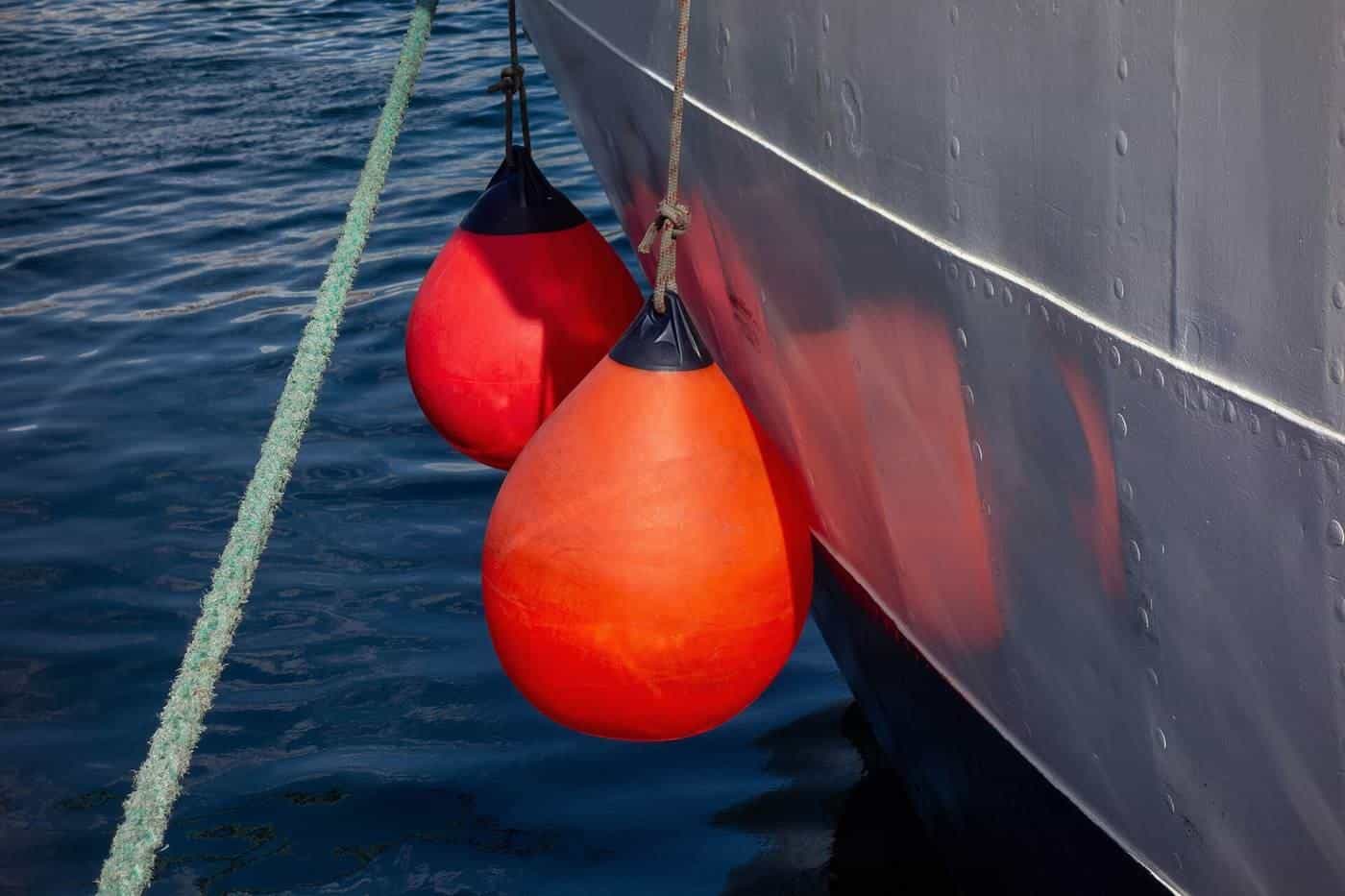
Fenders sit between your hull and the berth, or between your boat and another boat when you raft up.
Types. Cylindrical fenders are the most common and can be hung vertically or horizontally. Round or ball fenders suit bows, sterns and boats with flare. Flat fenders and fender boards help against piles, where a round fender can roll away.
Placement. Hang fenders where the hull will actually touch, usually at the widest part of the boat and near the bow and stern. Set the height so the fender sits against the pontoon edge or rubbing strake. On a fixed jetty, the right height changes with the tide.
When to put them out. The SA handbook advises showing crew where to place fenders before you berth, and putting them out before contact. Bring them in once you leave the berth; fenders hanging over the side while under way look sloppy and can be lost.
Size. Bigger and heavier boats need bigger fenders. If in doubt, ask a chandler or check the fender maker's sizing guide for your boat's length and weight.
Knots and cleats
A few knots and a correct cleat hitch cover most needs:
- Cleat hitch: a turn around the base, a figure of eight over the horns, and a locking turn.
- Bowline: a fixed loop that won't slip or jam, easy to undo after a load.
- Round turn and two half hitches: for tying to a rail, ring or pile.
- Clove hitch: quick and handy for fenders, but can slip under changing load.
Practise these at home until you can tie them quickly without thinking.
Rafting up
When boats raft alongside each other, put fenders between them at the widest points, use bow and stern lines plus springs between boats, and stagger the boats so masts and spreaders don't clash. The heaviest boat should usually be on the inside.
Preparing for strong winds
When strong winds or a storm are forecast:
- Add extra lines, and double up important ones, attached to different cleats where possible. Get Ready Queensland advises doubling all ties.
- On fixed piles, tie lines high to allow for rising water, as Get Ready Queensland suggests.
- Add chafe protection everywhere lines touch.
- Add or move fenders to where the boat might touch.
- Reduce windage by removing covers, clears, bimini tops and furled sails, as MSQ advises.
See our guide to preparing for severe weather.
Leaving the boat for a long time
If you'll be away for weeks, set up the boat to look after itself. Check every line and its chafe protection, and add a spare line on the windward side. Make sure fenders are in the right places and can't ride up. Remove or secure covers that could flog in the wind, and ask the marina or a neighbour to keep an eye on things.
Key points
- The four main lines are the bow line, bow spring, stern line and stern spring.
- Springs stop the boat surging fore and aft; bow and stern lines hold the ends in.
- Use rope, not chain, and protect it from chafe.
- Hang fenders where the hull touches, at the right height, before you come alongside.
- Double up lines and add chafe protection before strong winds.
Frequently asked questions
What is a spring line?
A line that runs fore and aft rather than straight across to the berth. A bow spring runs from the bow to a point on the berth aft of the boat’s centre; a stern spring runs from the stern to a point forward of centre. Together they stop the boat surging.
How many lines does my boat need?
It depends on the size of the boat and the conditions. The SA boating safety handbook lists four main lines: bow line, bow spring, stern line and stern spring.
Should I use rope or chain to tie up?
Rope. It stretches and absorbs shock. Maritime Safety Queensland notes that rope has more give than chain when preparing for severe weather.
How high should fenders hang?
At the height where the hull will touch the pontoon or piles. Check them once the boat is tied up, and adjust for tides on fixed jetties.
How do I stop lines chafing?
Use chafe protection, such as hose or purpose-made sleeves, where lines pass over edges or through fairleads. Get Ready Queensland suggests covering tie lines at contact points before storms.
Sources and further reading
Facts on this page were checked against these primary and official sources. Conditions change — confirm before you travel or buy.
- SA Boating Safety Handbook, chapter 8: Anchoring, mooring and berthing (PDF) — Department for Infrastructure and Transport SA
- Mooring — Maritime Safety Victoria
- Preparing for severe weather — Maritime Safety Queensland
- Protect your boat — Get Ready Queensland