Every boat needs a home when it isn't being used. For a small runabout that might be a trailer in the carport. For a 12-metre yacht it might be a marina pen, a swing mooring in a sheltered bay, or a cradle on the hardstand during maintenance. Each option has a different mix of convenience, protection, upkeep and paperwork. This guide explains the main types of boat storage used in Australia, what each is like day to day, and the questions to ask before you commit.
5
Main ways to keep a boat
Marina berth, mooring, dry stack, hardstand, trailer
5.2 m
Minimum vessel length
Generally required for a NSW private mooring licence
28 days
Absence limit
NSW moored vessels, without written approval
Marina berths
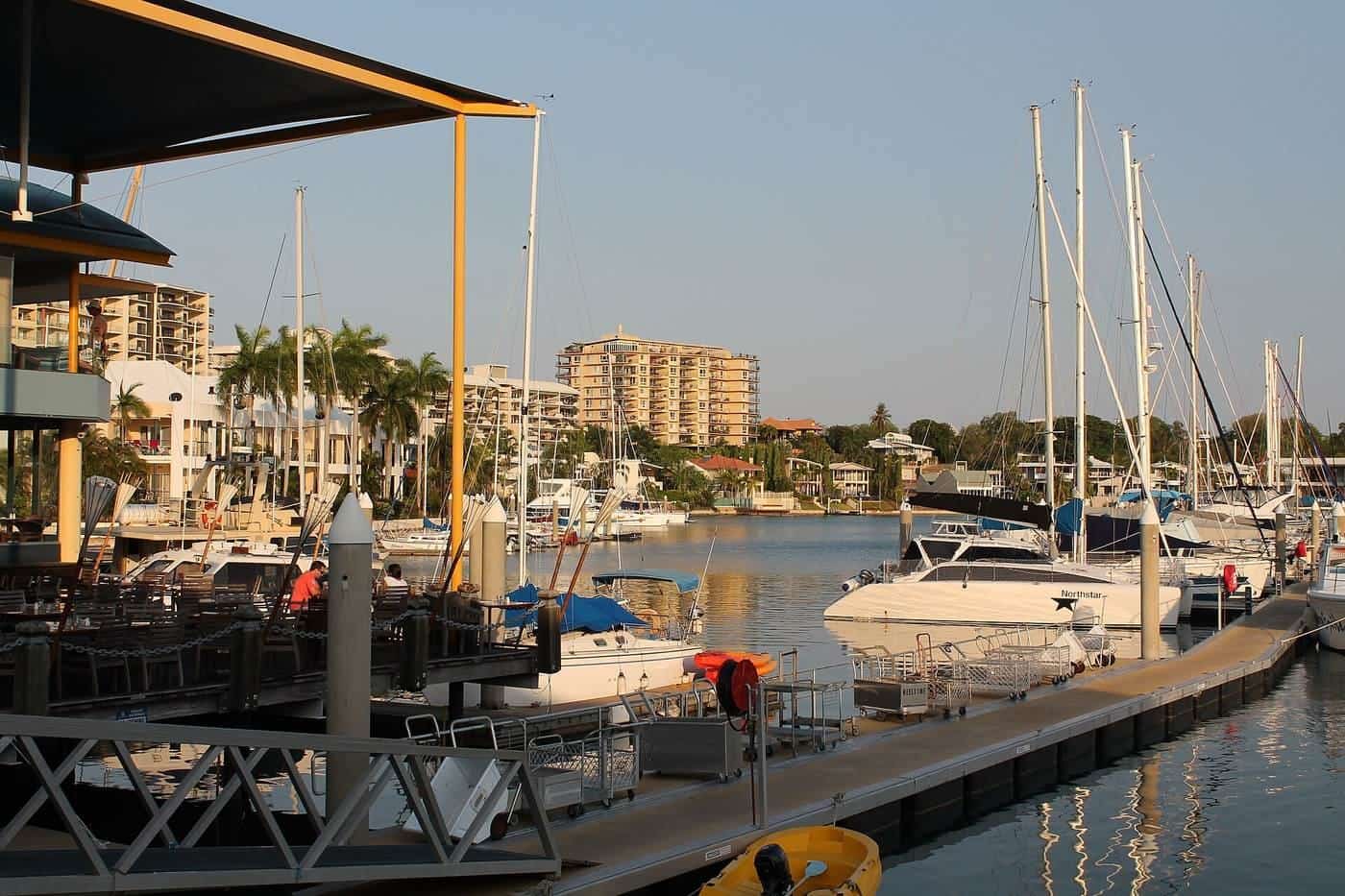
A marina berth, sometimes called a pen, slip or wet berth, is a defined space alongside a floating pontoon or fixed jetty inside a marina. The boat is tied to the pontoon or to piles with mooring lines, and you step straight aboard from the walkway.
What you usually get: walk-on access, shore power, fresh water, security gates, car parking, toilets and showers, and often a fuel dock and sewage pump-out nearby. Many marinas also have a chandlery, a boatyard or a café.
Advantages: convenience is the big one. You can drop in after work, plug in a battery charger, wash the boat down and leave again. Getting on and off is easier for children, older crew and guests. Breakwaters and pontoons give a level of protection from swell.
Disadvantages: marina berths are usually the most expensive way to keep a boat in the water, and popular marinas can have waiting lists. Your boat sits in the water all the time, so fouling builds up on the hull and running gear. You'll sign a berth licence or agreement with conditions about insurance, maintenance, contractors, noise and living aboard.
Marina berths come in a few shapes:
- Finger berths, where a short pontoon runs alongside the boat on one side;
- Double berths, where two boats share the space between two fingers;
- Pile berths, where the boat is held between timber or concrete piles and the pontoon is at the bow or stern;
- Alongside or T-head berths, at the end of a pontoon arm, often used for larger vessels and visitors.
Swing moorings
A swing mooring is a buoy attached by chain or rope to a heavy block, screw anchor or other fixing on the seabed. Your boat is tied to the buoy at the bow and swings around it as the wind and tide change.
Advantages: moorings generally cost less than marina berths, and a well-chosen mooring in a sheltered bay can be a beautiful place to keep a boat. Boats on moorings always lie head to wind or current, which can be kinder in some conditions than being tied side-on to a pontoon.
Disadvantages: you need a tender, such as a dinghy, to get to the boat. There's no shore power or water. You have to look after the mooring gear and arrange regular inspections. In many areas moorings are licensed and in short supply.
In NSW, a private mooring licence from Transport for NSW allows you to moor your vessel at a specific site on navigable waters. If there's no site available in your area you can join a priority wait list. The licence conditions say the vessel must generally be at least 5.2 metres long and registered in the licence holder's name, and it may not be absent from its mooring for more than 28 consecutive days without prior written approval. See our guide to swing moorings for more.
Dry stack storage
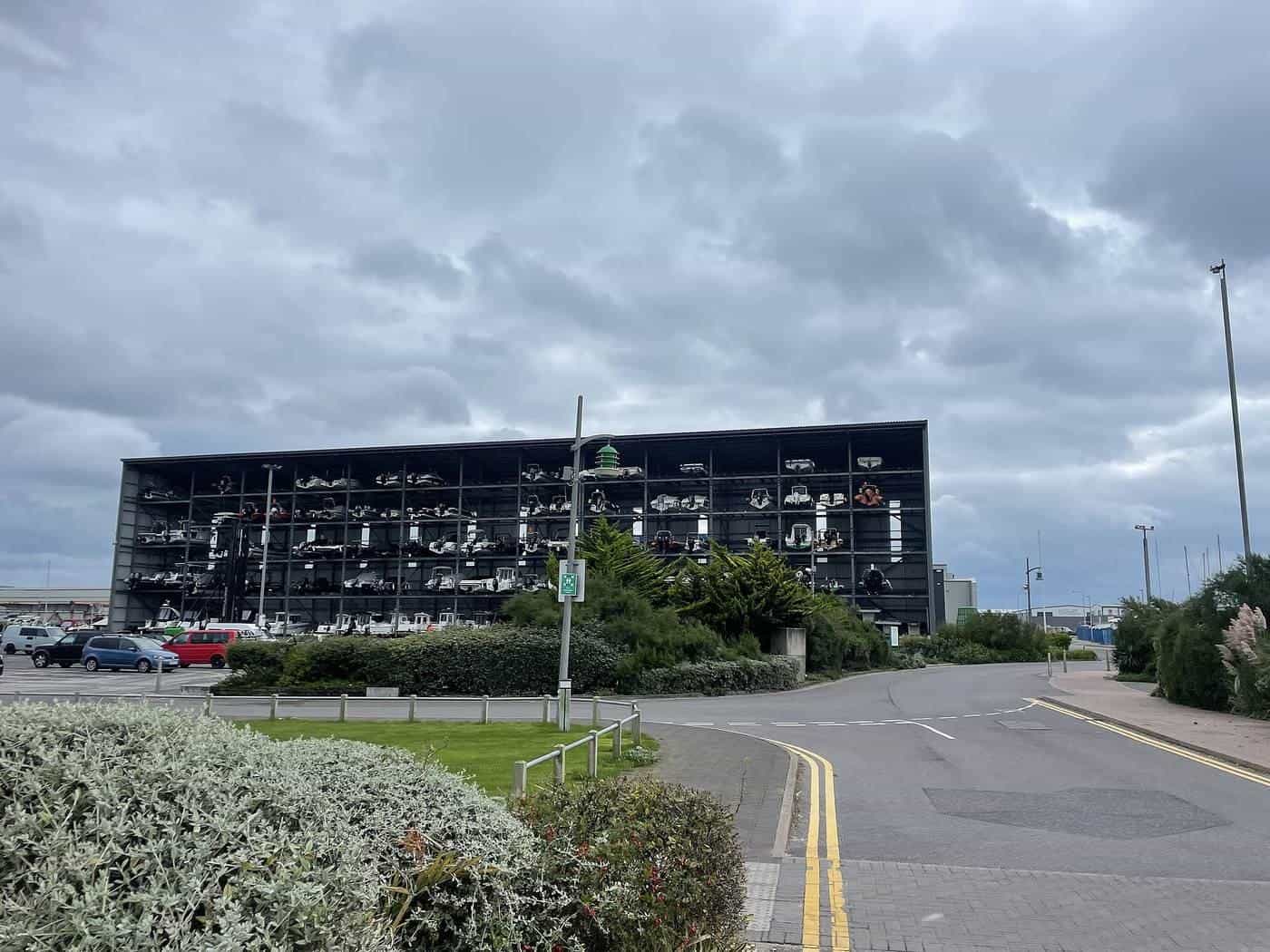
Dry stack storage keeps boats out of the water on racks, often inside a large shed. When you want to go boating you book a launch; staff lift the boat off the rack with a large forklift and put it in the water, then lift it out and rinse it when you return.
Advantages: the hull stays out of the water, so fouling is much less of a problem, and the boat is protected from sun and weather if the racks are under cover. You don't need a trailer, a tow vehicle or space at home.
Disadvantages: it usually suits powerboats within a certain size and weight range, and sailing yachts with keels and masts generally don't fit. You depend on the operator's hours and booking system, which can make spontaneous trips harder.
Hardstand
The hardstand is the area of a boatyard where boats sit on cradles or stands on land. Most owners use it for maintenance: antifouling, propeller work, hull repairs and surveys. Some boats are stored on the hardstand for longer periods, particularly yachts being refitted or boats laid up for a season.
Advantages: a dry hull, easy access to underwater surfaces and boatyard facilities on site.
Disadvantages: boats on stands can be vulnerable in very strong winds, so check the yard's rules for severe weather. Yards charge for lifting and for each day on the hard, and many have rules about what work owners can do themselves and how dust and runoff must be captured.
Keeping a trailer boat at home
For many Australians, the boat lives on a trailer in the driveway, carport or garage and is launched at a public ramp.
Advantages: low ongoing costs, easy access for cleaning and maintenance, and freedom to tow the boat to different waterways.
Disadvantages: launching and retrieving takes time, especially at busy ramps. You need a suitable tow vehicle, a roadworthy trailer and space at home, and strata or council rules may limit where you can park a boat. Moving a boat between waterways also brings biosecurity responsibilities: Agriculture Victoria's advice is to check, clean and dry the boat, the trailer and gear before moving to a new location.
Comparing the options
| Option | Access | Hull in water | Facilities | Typical considerations |
|---|---|---|---|---|
| Marina berth | Walk on | Yes | Power, water, security | Higher cost, berth agreement, waiting lists |
| Swing mooring | By tender | Yes | None | Licence, mooring gear upkeep, weather exposure |
| Dry stack | Staff launch | No | Varies | Size limits, booking times |
| Hardstand | Ladder | No | Boatyard | Mostly for maintenance, wind exposure |
| Trailer at home | Drive to ramp | No | Your own | Tow vehicle, ramp time, home storage rules |
Which one suits you?
Think about how you use the boat:
- If you go out often, at short notice, a marina berth or a mooring close to home will get the boat used more.
- If the boat is small and powered, dry stack or a trailer may be cheaper and keep the hull cleaner.
- If you sail a keelboat, a marina berth or a mooring is usually the only practical choice for everyday storage, with hardstand time for maintenance.
- If you plan to live aboard, check the rules first. Many marinas restrict it, and in NSW the private mooring licence conditions list using a moored vessel as a residence as a ground for cancelling the licence.
Cost matters too, but it varies widely from place to place and marina to marina, so ask several operators for their current fees and what's included. Factor in insurance, maintenance, lifting, antifouling and the cost of a tender or a trailer.
Questions to ask before you commit
- What exactly is included in the fee, and what costs extra?
- How long is the agreement, and how much notice must either side give?
- What insurance do you need, and what level of liability cover?
- Can you use your own contractors for maintenance?
- What are the rules for severe weather, and will you need to move the boat?
- Is living aboard, or staying overnight, allowed?
- How is the berth or mooring measured, and what if you change boats?
Key points
- The five main options are marina berths, swing moorings, dry stack, hardstand and a trailer at home.
- Marina berths are the most convenient; moorings cost less but need a tender and more upkeep.
- Dry stack and trailers keep the hull out of the water and reduce fouling.
- Moorings are licensed in most places, and NSW has priority wait lists.
- Read the agreement or licence conditions carefully, especially on insurance, living aboard and severe weather.
Frequently asked questions
What is the difference between a marina berth and a mooring?
A marina berth is a fixed space at a pontoon or jetty, usually with walk-on access, power and water. A swing mooring is a buoy attached to a block or anchor on the seabed, and you reach the boat by tender.
What is dry stack storage?
The boat is kept out of the water on racks, often in a shed, and launched by forklift when you want to use it. It suits smaller powerboats and limits fouling.
Do I need a licence for a mooring?
In most places, yes. In NSW, a private mooring licence from Transport for NSW lets you moor at a specific site, and many areas have priority wait lists.
Can I live on my boat in a marina?
Only where the marina allows it. Many berth agreements restrict living aboard, and NSW private mooring licence conditions list using a moored vessel as a residence as a ground for cancellation.
Which option is best for a trailer boat?
Many trailer boat owners keep the boat at home and launch at a ramp. Dry stack is an alternative if storage at home is not practical.
Sources and further reading
Facts on this page were checked against these primary and official sources. Conditions change — confirm before you travel or buy.
- Moorings: type, licence and fees — Transport for NSW
- Private moorings — Transport for NSW
- Private Mooring Licence Conditions (PDF) — Transport for NSW
- Mooring — Maritime Safety Victoria
- How boat owners can help stop the spread of marine pests — Agriculture Victoria