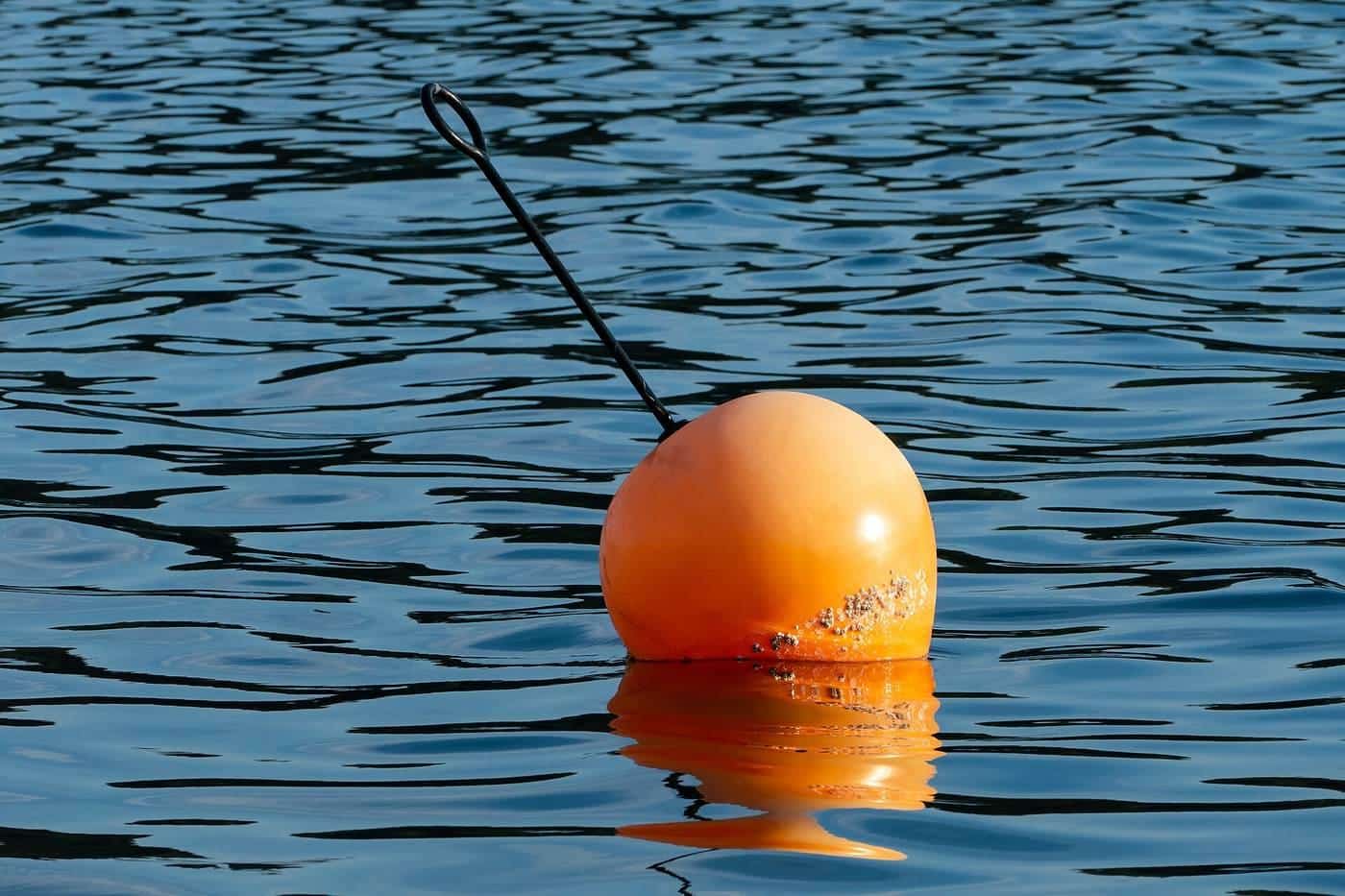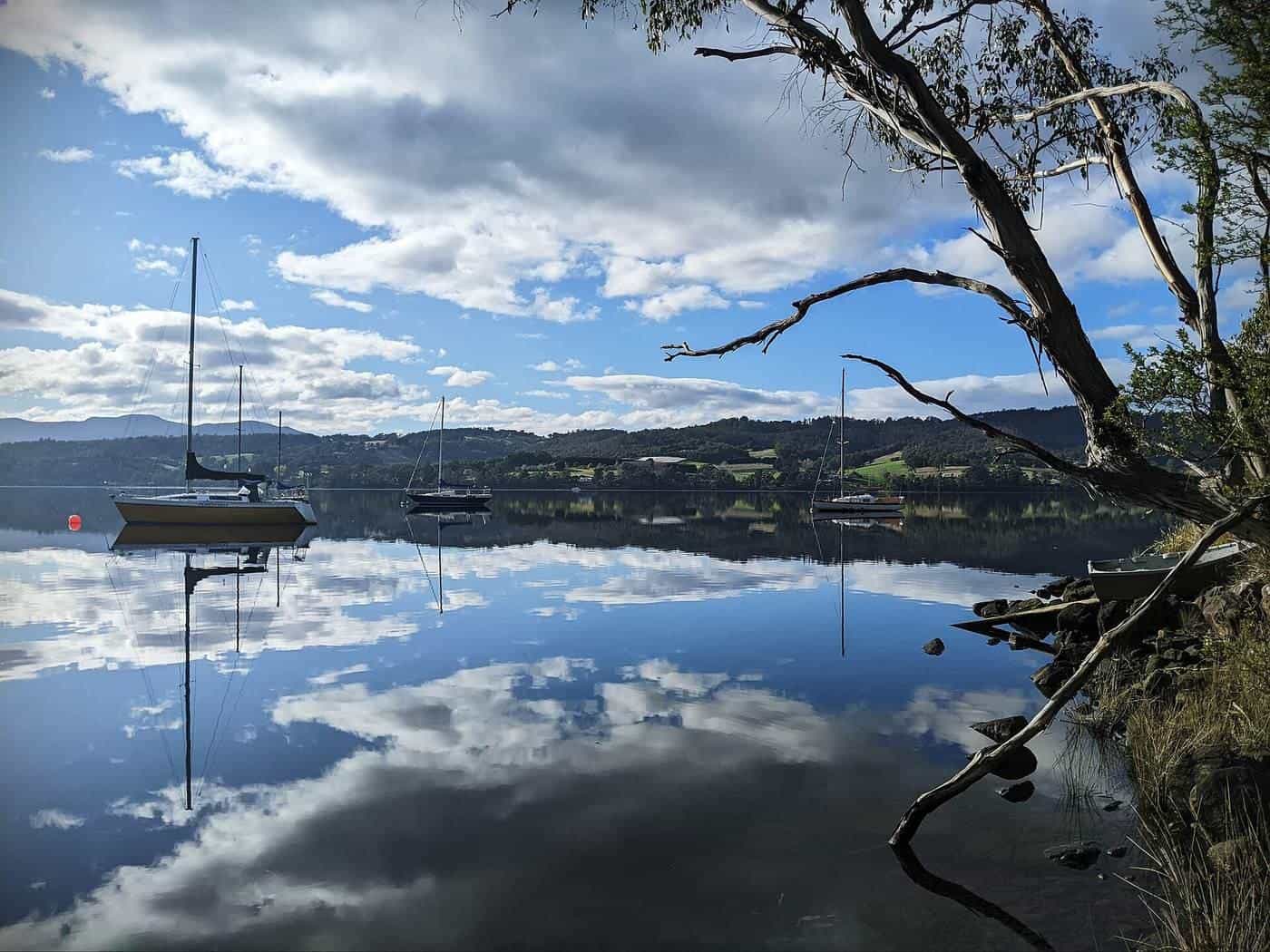
A swing mooring is a simple idea: a heavy fixing on the seabed, a length of chain or rope, and a buoy on the surface that you tie your boat to. The boat swings around the buoy as the wind and tide change, always pointing into the strongest force. Moorings are used all around the Australian coast, in harbours, bays, rivers and lakes, and they're often a cheaper alternative to a marina berth. They also come with rules and responsibilities that new owners don't always expect.
14 days
To respond to an offer
NSW priority wait list
31 days
To complete the licence
After accepting a NSW offer
28 days
Maximum absence
NSW, without prior written approval
How a mooring works
A typical swing mooring has four parts:
- The fixing, which might be a concrete block, a heavy anchor or a screw driven into the seabed;
- The ground chain or riser, a heavy chain that lies on or near the seabed and absorbs shock loads;
- The top line or strop, often rope or lighter chain, which leads up to the buoy and then to the boat;
- The buoys, usually a larger mooring buoy and a smaller pick-up buoy that you grab with a boat hook.
The boat is secured to the mooring at the bow. Because it can swing in a full circle, each mooring needs clear water all around it, called swing room, so it doesn't hit neighbouring boats, jetties or the shore.
Licences and approvals
Moorings sit on public waterways, so in most places you need permission from the state waterways authority to lay or use one. The rules differ between states and even between waterways, so check with your local authority before you buy a boat with a mooring in mind.
New South Wales. A NSW private mooring licence allows you to moor your vessel at a specific site on navigable waters. Transport for NSW's Private Mooring Map shows site availability in your preferred area. Where no site is available, you can apply to join a priority wait list by completing an online application, providing proof of identity and paying the fee.
When a site becomes available and you reach the top of the list, you receive an offer by email or SMS. You must respond within 14 days. If you accept, you have a further 31 days to have a suitable vessel registered in your name, complete the licence application, provide a recent photo of the vessel and proof of identity, and pay the remaining fees. If you decline, you can ask in writing to stay on the list, which puts you at the bottom; declining a second offer removes you.
Victoria and South Australia. Maritime Safety Victoria advises contacting your local waterway manager if you intend to put down a permanent mooring. The South Australian boating safety handbook says you need to complete an application form and lodge it with the state's Department for Infrastructure and Transport before putting down a permanent mooring, and you may need to consult other authorities depending on the location.
Other states. Queensland, Western Australia, Tasmania and the Northern Territory have their own mooring systems and authorities. Search your state's maritime authority website for moorings before you commit.
Licence conditions
Mooring licences come with conditions, and breaking them can lead to cancellation. The NSW private mooring licence conditions include:
- the vessel must generally be at least 5.2 metres long and registered in the licence holder's name;
- the allocated vessel can't be swapped for another without written approval;
- the vessel may not be absent from the mooring for more than 28 consecutive days without prior written approval;
- you must notify Transport for NSW of proposed changes to your licence details at least seven days before the change;
- fees remain payable until the licence is cancelled or the vessel and mooring apparatus are removed, whichever is later.
The conditions list grounds on which a licence may be cancelled, including offensive noise, pollution, non-payment of fees, breach of conditions and use of a moored vessel as a residence. Read the full conditions for your licence, because they're legally binding.
Choosing a mooring site
If you have a choice of site, Maritime Safety Victoria and the SA handbook suggest considering:
- Is the location protected from wind and tide effects?
- Can it be easily reached for use and regular maintenance?
- Will it interfere with any other mooring or property?
- Will your vessel, and those nearby, have full swing clearance?
- Is the mooring apparatus suitable for the vessel?
Also think about how you'll get to the boat. You'll need somewhere to keep and launch a tender, and a safe place to leave it while you're out.
Mooring gear and maintenance
Mooring gear lives underwater and wears constantly. Chain rusts and wears where links rub together, shackles loosen, rope chafes and buoys get damaged. A failure can send your boat onto rocks, a beach or other boats.
- Have the mooring installed by a professional once it's approved. Maritime Safety Victoria recommends this.
- Follow any inspection and maintenance requirements in your licence. Many authorities require periodic inspections by an approved contractor.
- Check the condition of lines and attachment points on your boat regularly for damage and wear, as Maritime Safety Victoria advises.
- Use chafe protection where lines pass through fairleads.
- Replace pick-up lines and strops at the first sign of wear.
If you change to a bigger or heavier boat, the mooring may no longer be suitable. In NSW, replacing the vessel on a mooring needs an application and approval first.
Getting on and off a mooring
Picking up a mooring takes practice. Maritime Safety Victoria's advice is to approach slowly, watch the wind and tidal flow, use the pick-up buoy as an indicator of drift, approach into the wind or against the tide using the stronger one as a brake, avoid running over the buoy, catch the pick-up buoy with a boat hook and secure the line to a bow cleat. Our guide to picking up a mooring covers this step by step.
Moorings in bad weather
Moored boats are exposed to the full force of the wind. Before storms, add extra lines if your mooring allows, remove covers and sails that catch wind, and check that the bilge pump and batteries are working. In Queensland, follow the directions of the Regional Harbour Master and your area's Extreme Weather Contingency Plan. See our guide to preparing for severe weather.
Moorings compared with marina berths
| Swing mooring | Marina berth | |
|---|---|---|
| Getting aboard | By tender | Walk on |
| Power and water | No | Usually |
| Licence | State authority | Marina agreement |
| Maintenance | Your mooring gear | The marina's pontoons |
| Swing | Boat swings with wind and tide | Boat held in place |
Key points
- A swing mooring is a seabed fixing, chain or rope, and a buoy your boat swings around.
- Most states require a licence or approval, and some areas have long wait lists.
- In NSW, respond to an offer within 14 days, then you have 31 days to complete the licence.
- NSW licence conditions cover vessel size, registration, absences and living aboard.
- Have moorings professionally installed, inspected and maintained.
Frequently asked questions
How do I get a mooring in NSW?
Check site availability on the Transport for NSW Private Mooring Map and apply for a licence. If no site is available, join a priority wait list online, with proof of identity and a fee.
How long do I have to accept a mooring offer in NSW?
You must respond within 14 days of the offer. If you accept, you then have 31 days to register a suitable vessel in your name, complete the application, provide a photo and pay the remaining fees.
How big does my boat need to be for a NSW mooring?
The NSW private mooring licence conditions say the vessel must generally be at least 5.2 metres long and registered in the licence holder’s name.
Can I leave my mooring empty?
In NSW, the vessel may not be absent from its mooring for more than 28 consecutive days without prior written approval from Transport for NSW.
Who should install a mooring?
Maritime Safety Victoria recommends having a professional install the mooring once you have approval from the relevant authority.
Sources and further reading
Facts on this page were checked against these primary and official sources. Conditions change — confirm before you travel or buy.
- Private moorings — Transport for NSW
- Private Mooring Licence Conditions (PDF) — Transport for NSW
- Moorings: type, licence and fees — Transport for NSW
- Mooring — Maritime Safety Victoria
- SA Boating Safety Handbook, chapter 8: Anchoring, mooring and berthing (PDF) — Department for Infrastructure and Transport SA